Paper Bike

Back to Portfolio

Problem

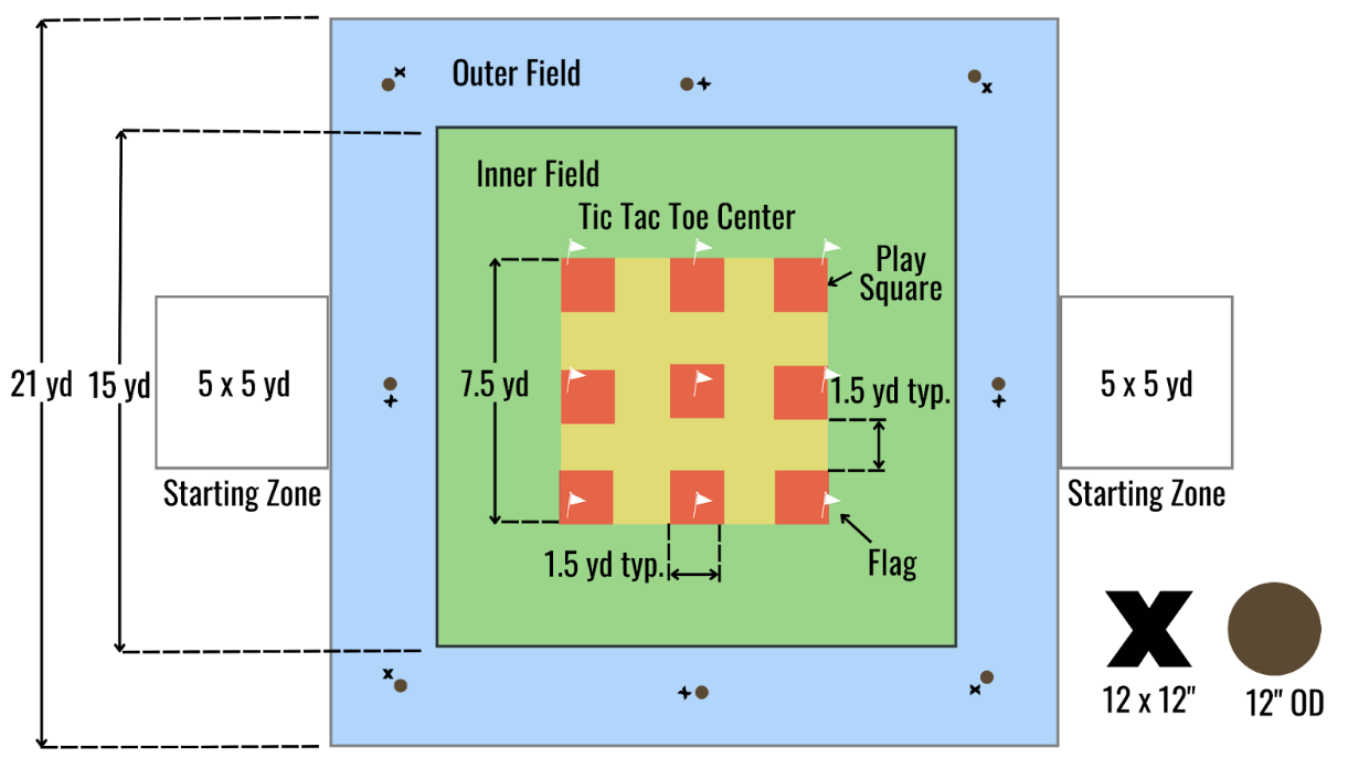
Design a human-powered vehicle constructed almost entirely from recycled paper materials and no more than 500g of non-paper components, capable of carrying one rider while a second team member propels it through an outdoor Tic-Tac-Toe course.

Outcome

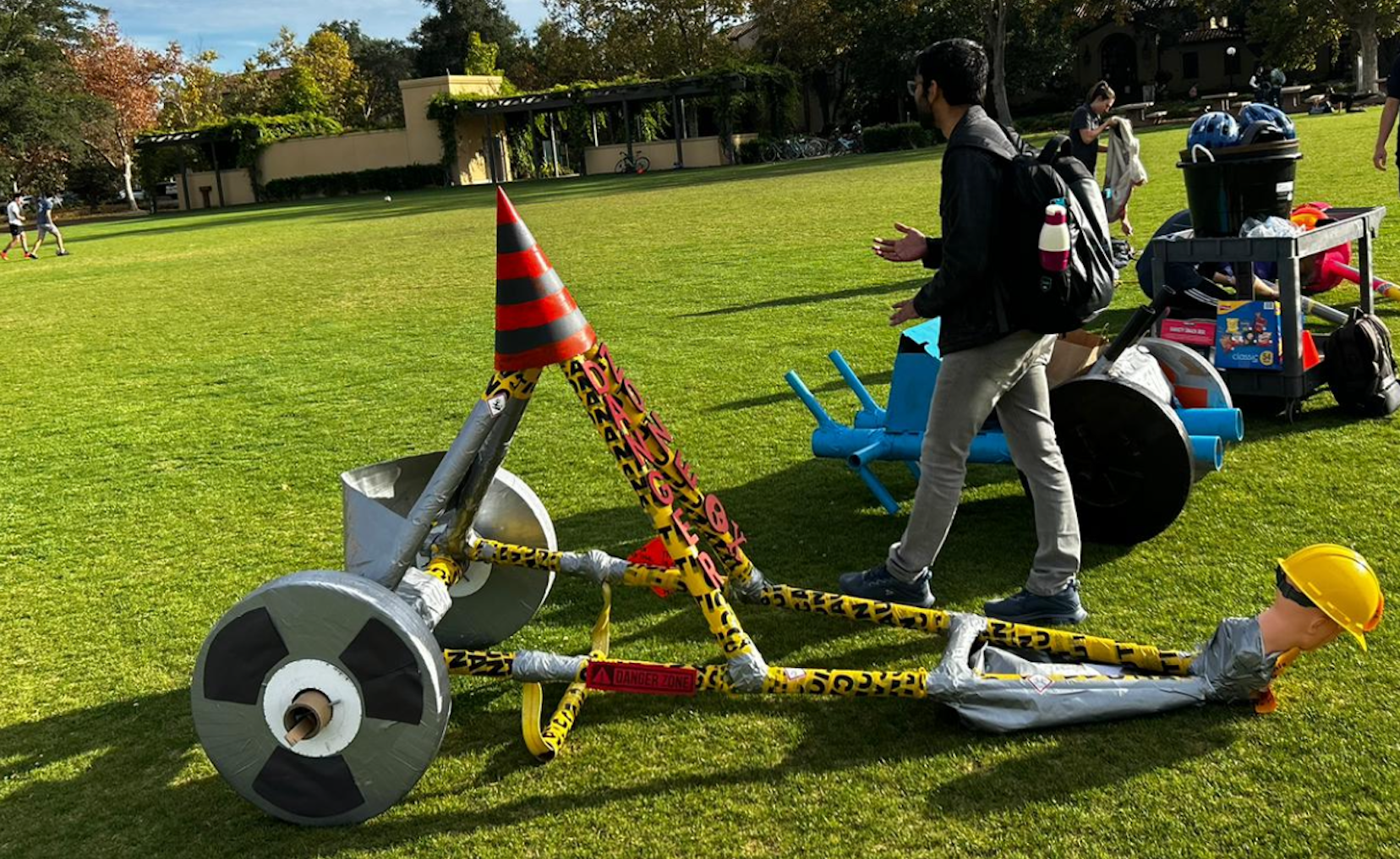
The final design proved that a truss-based cardboard tube frame, when joined with a layered combination of lashing, wood glue, and duct tape, could support a rider well beyond the required load while remaining light enough to be competitive. Our team placed third in the competition, surviving the event without structural damage despite several collisions.
Design

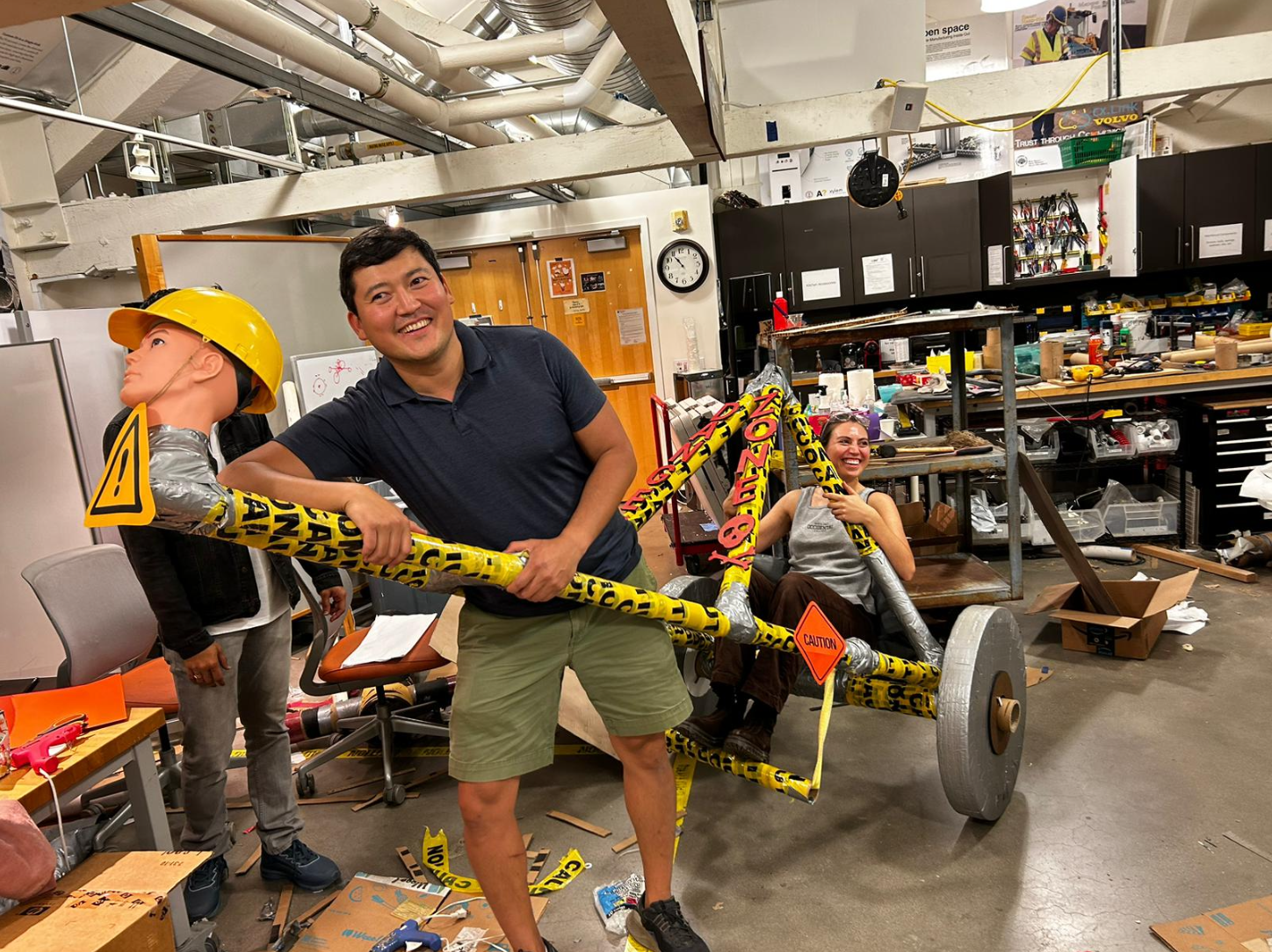
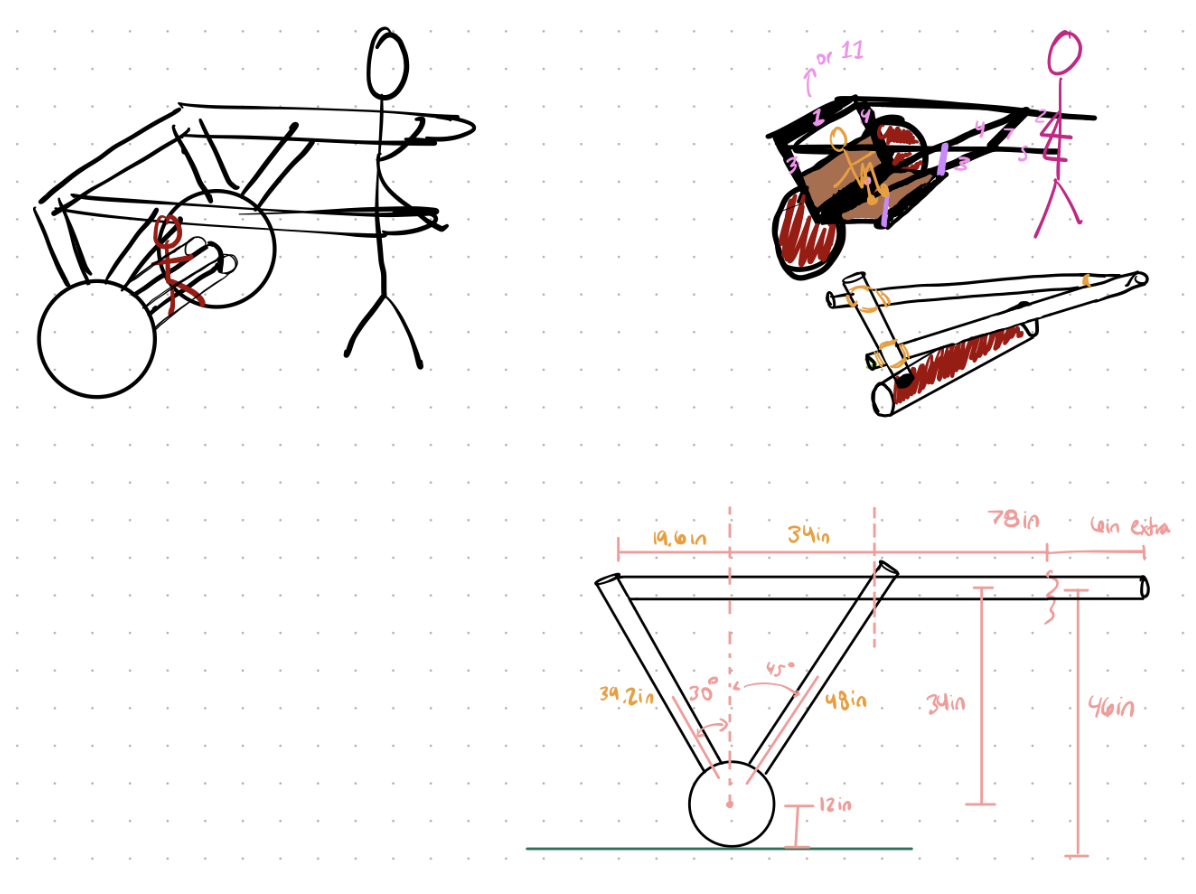
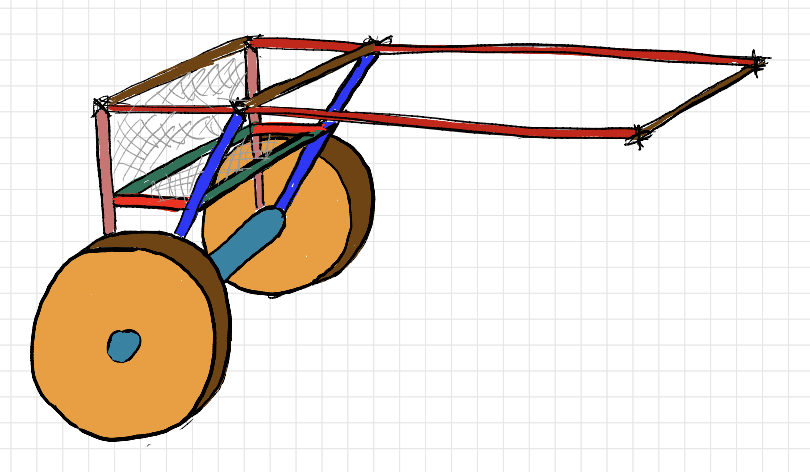
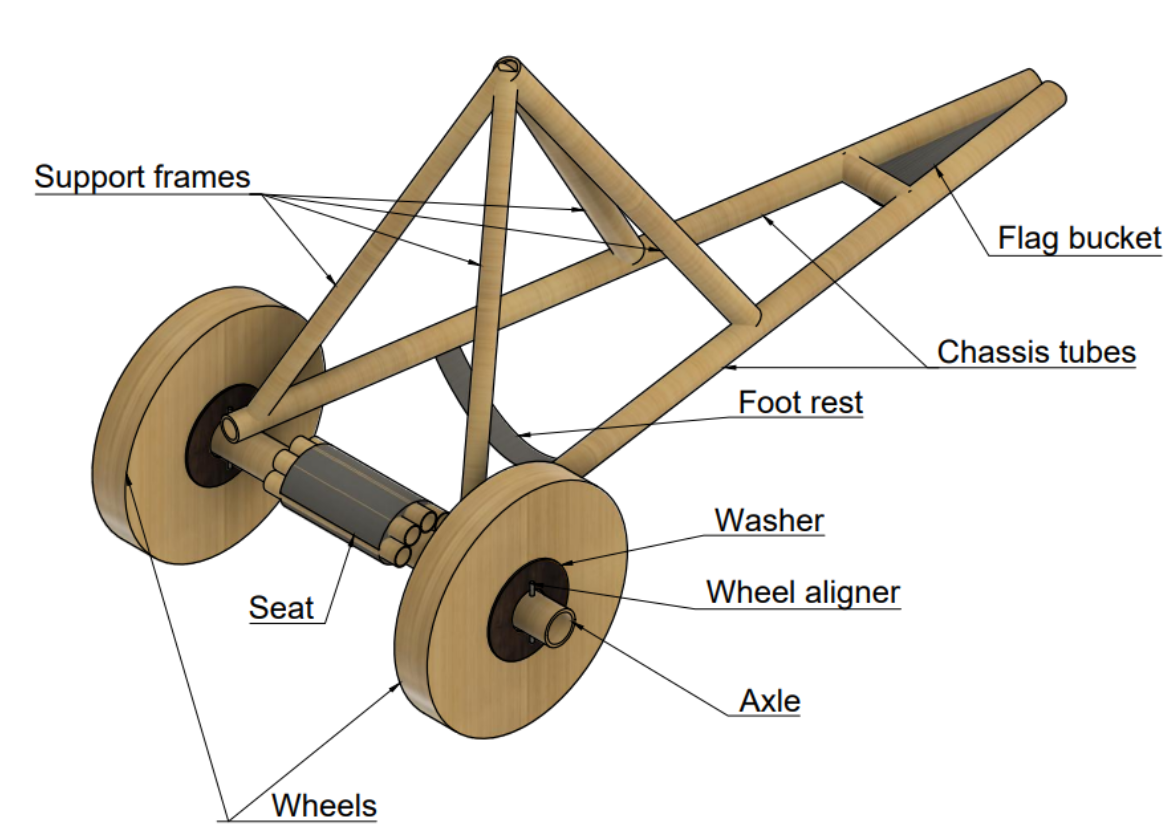
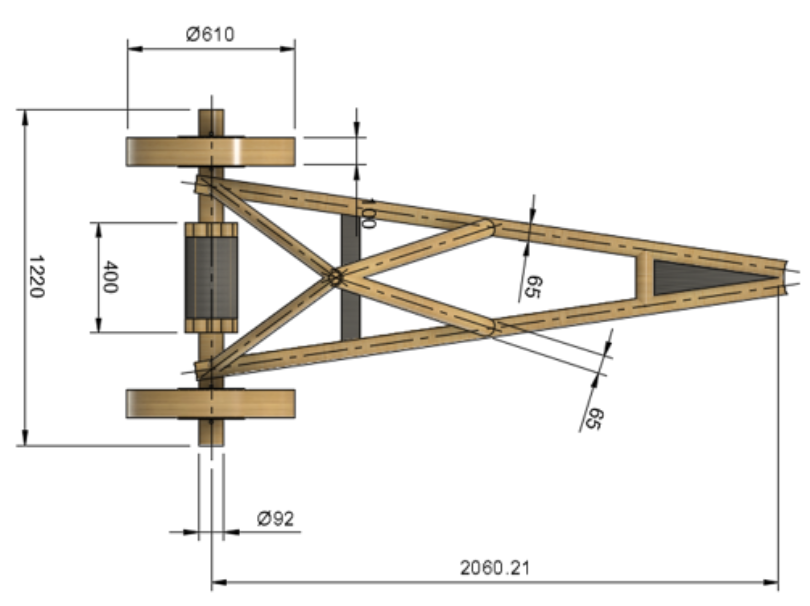
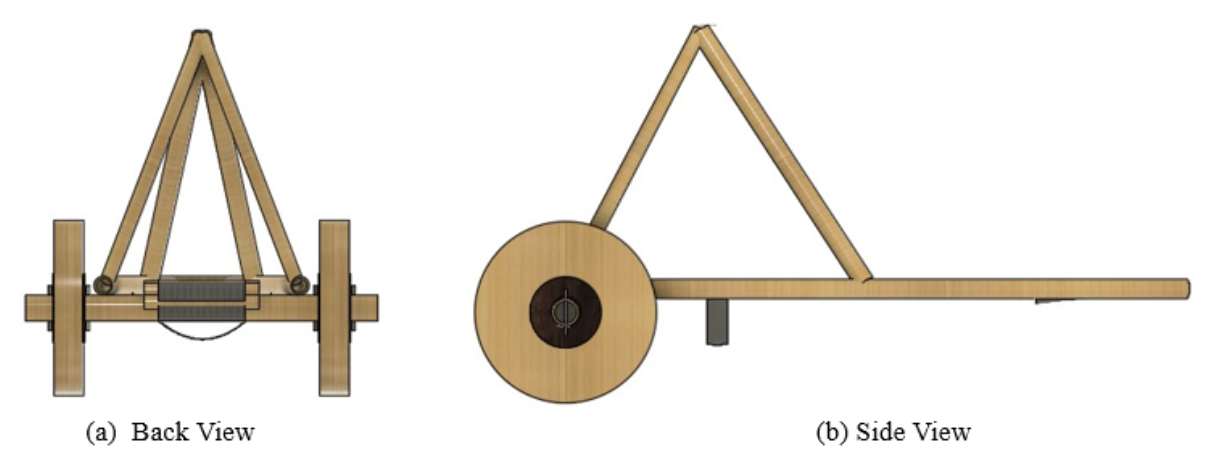
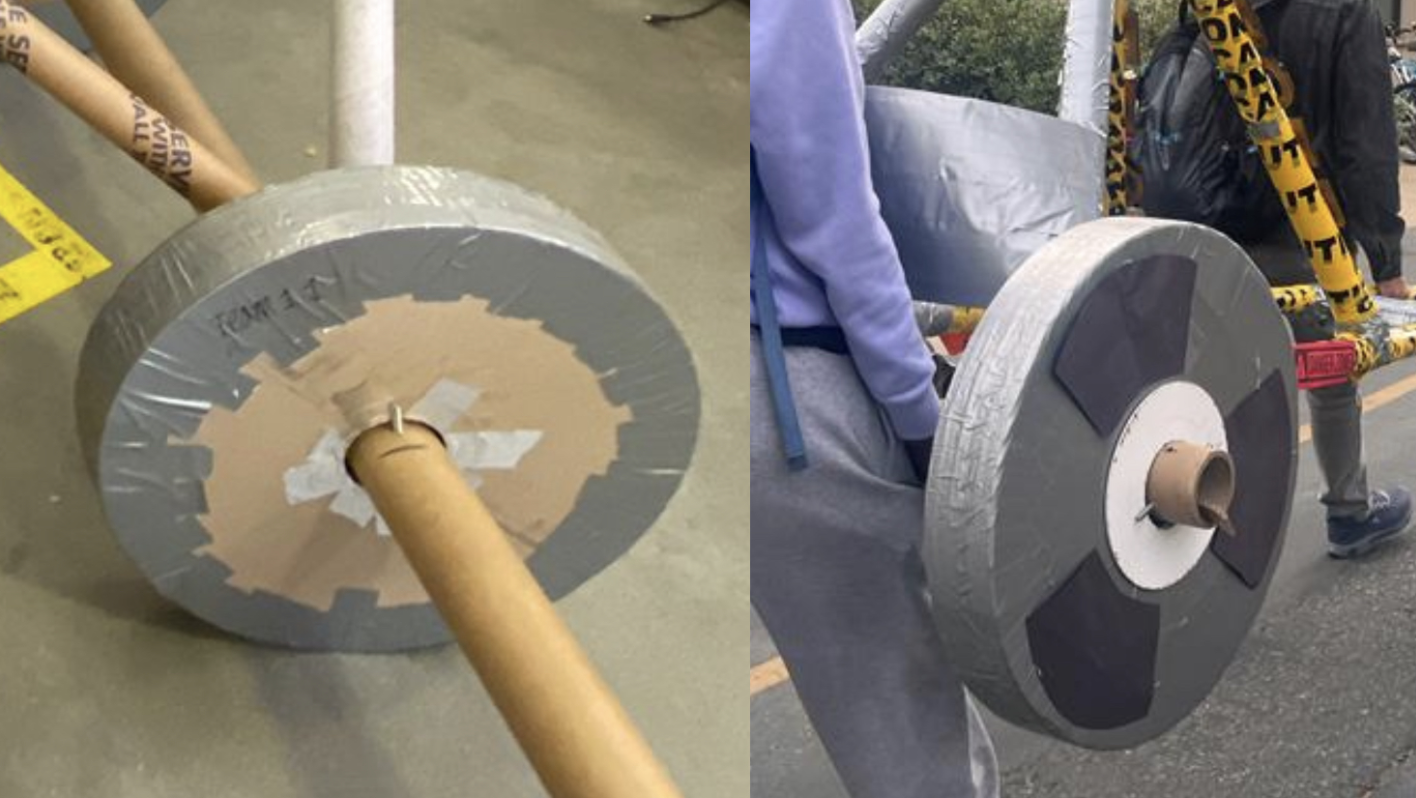
Inspired by the classic rickshaw, the team landed on a pulled vehicle with the rider seated over the axle and the propeller out front. Key priorities were minimizing weight, optimizing the center of gravity, and building in collision resilience. The final design featured a triangular pyramid support frame, an inversion of the original concept that traded rider uprightness for structural integrity. The wheels were created by gluing together semi-circular, laser cut pieces of cardboard, with wooden dowel rods serving as bearings.

Build

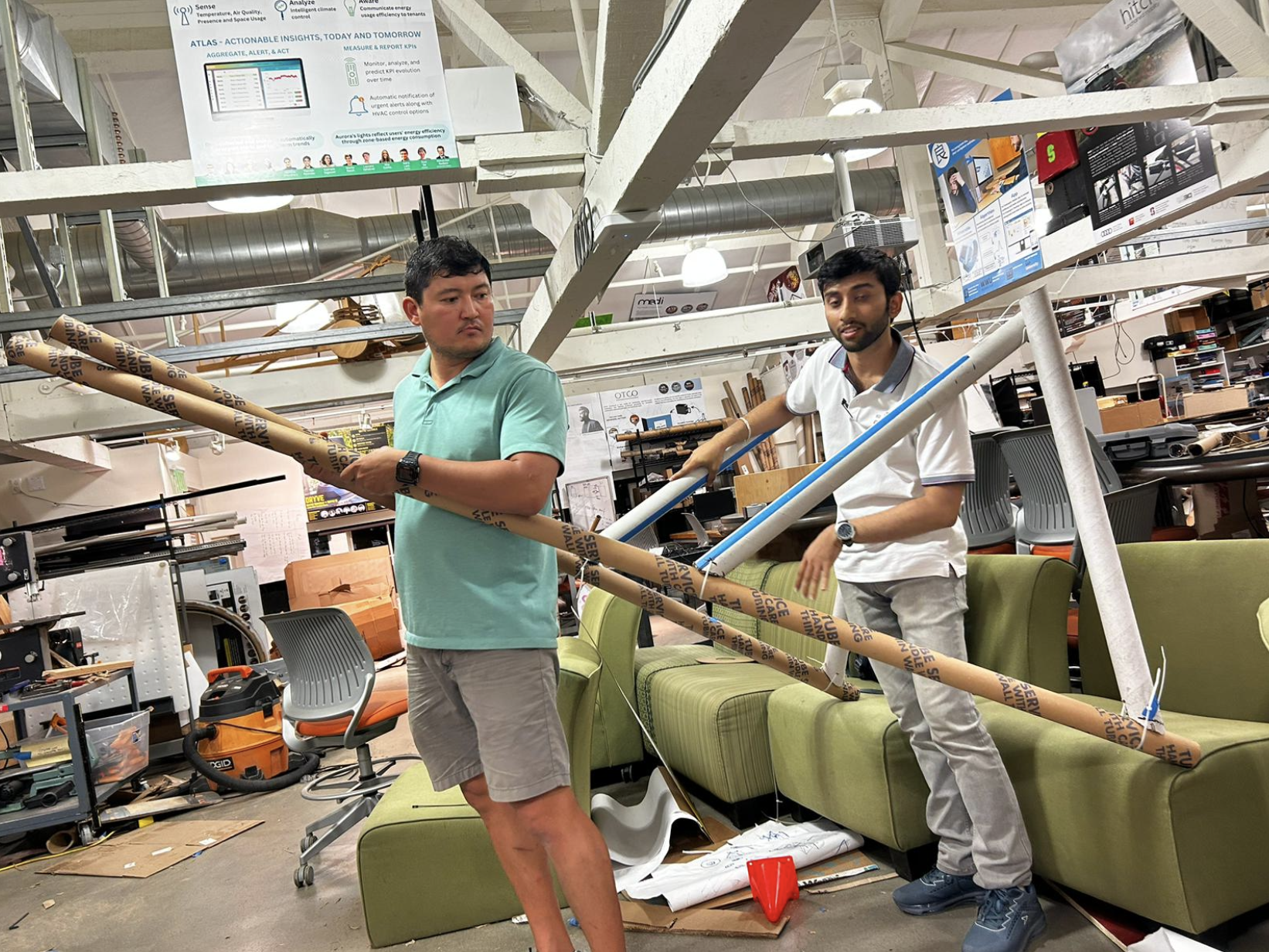
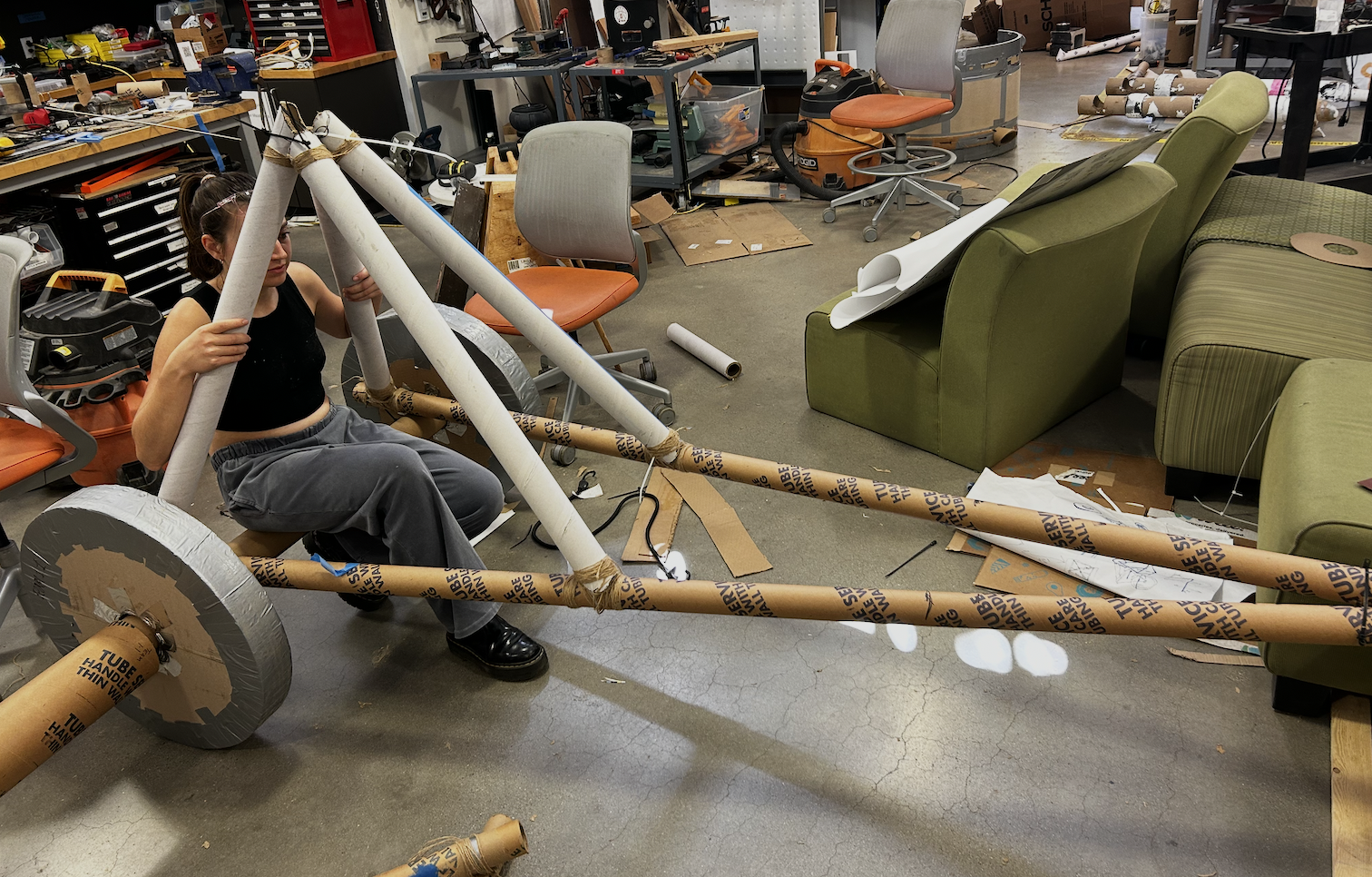
Materials were sourced entirely through scavenging, pulling cardboard boxes from bike shops, tubes from rug stores and fabric suppliers, and shared shop supplies. Wheels were laser-cut into semi-circles, layered 25 deep with offset seams, and wood-glued together. Frame joints used a four-step binding method: zip tie, lashing, wood glue, then duct tape, developed through systematic prototype testing of each method independently.

Testing and Iterations

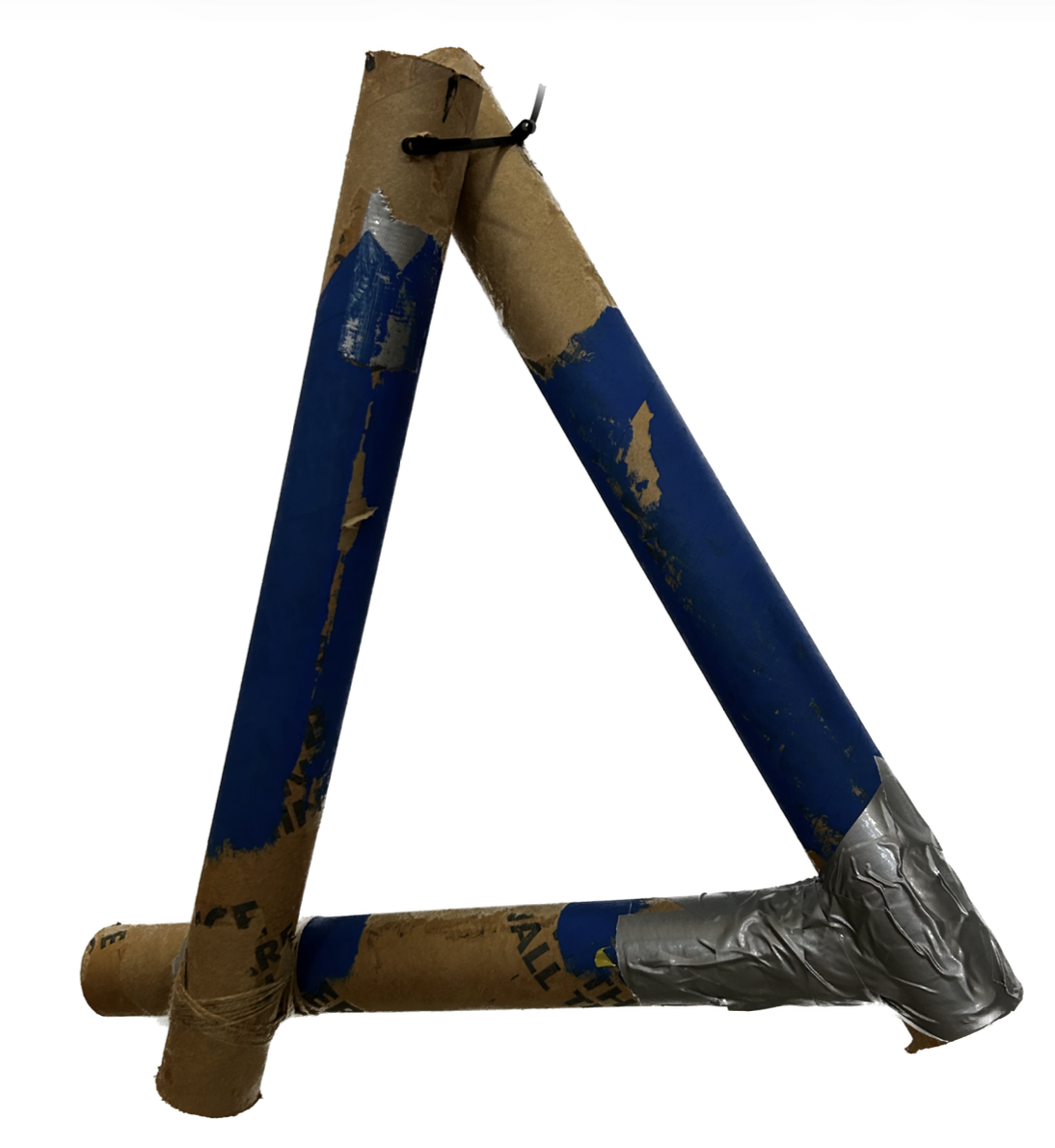
For joints, three triangular prototypes were built and destructively tested, one per binding method, to compare strength and rigidity before committing to the final frame approach. Two key issues surfaced during final testing. The metal wheel-retention rods were digging into the cardboard wheels, which was resolved by laser-cutting acrylic and Duron washers as sacrificial contact surfaces. A separate late discovery that the propeller needed both hands free to collect flags prompted the addition of a duct tape pocket at the front of the bike, a small change that meaningfully affected game-day strategy.

Reflections

This project was a great reminder of how rewarding hands-on building can be. Working within tight time and material constraints pushed the team to iterate rapidly, making real-time design decisions and solving problems as they surfaced rather than in theory. It was valuable to see how much could be learned from prior teams, whether borrowing a proven wheel geometry or avoiding known failure modes, and then building on that foundation with our own improvements. The process of physically testing joints, riding the bike, and watching issues emerge and get resolved in the span of hours was a different kind of engineering experience than anything done in a classroom. The construction week was chaotic and fun, and seeing Danger Zone hold up on competition day made it all worth it.