Pathfinder:
Repath

Back to Portfolio

Problem

Operating rooms generate significant amounts of single-use medical device waste, yet no scalable system exists to automatically sort and track high-value devices at the point of disposal. OR nurses are already overburdened, and manual sorting for existing take-back programs is not feasible at scale, leaving medical device manufacturers with no visibility into what happens to their products after they leave the hospital. Working across disciplines with ZHAW business students and sponsored by Johnson and Johnson, our Stanford team set out to bridge the gap between clinical waste streams and manufacturer take-back programs by designing an automated sorting and tracking solution deployable at the point of disposal.

Outcome

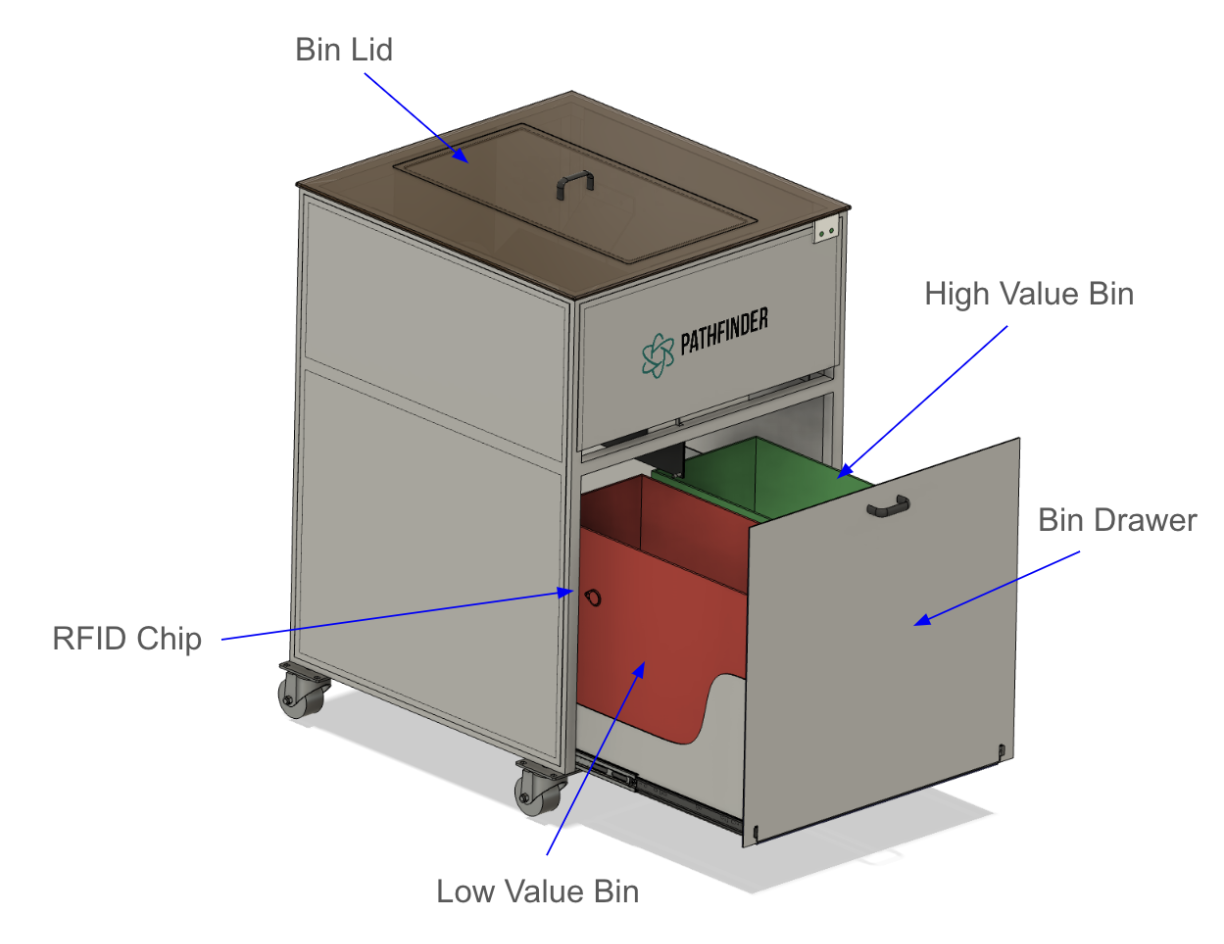
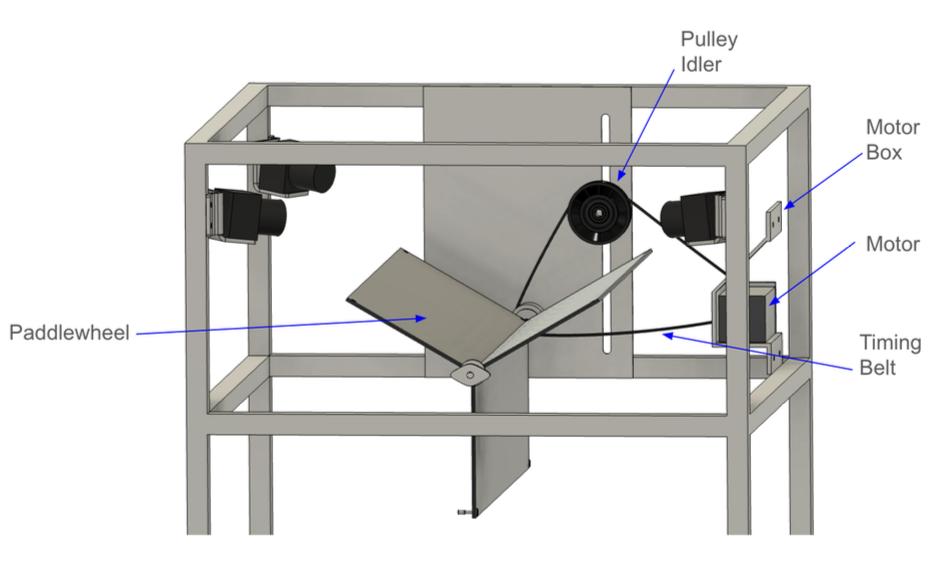
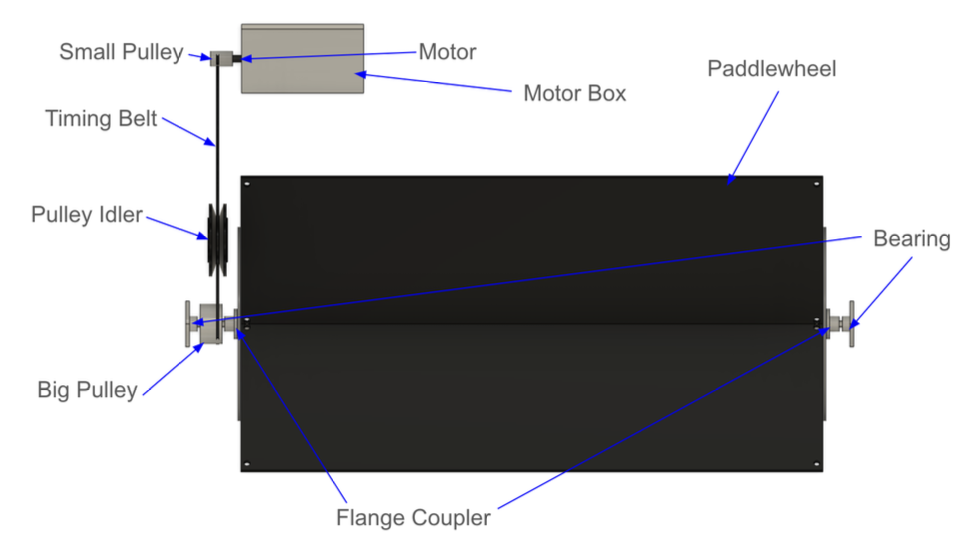
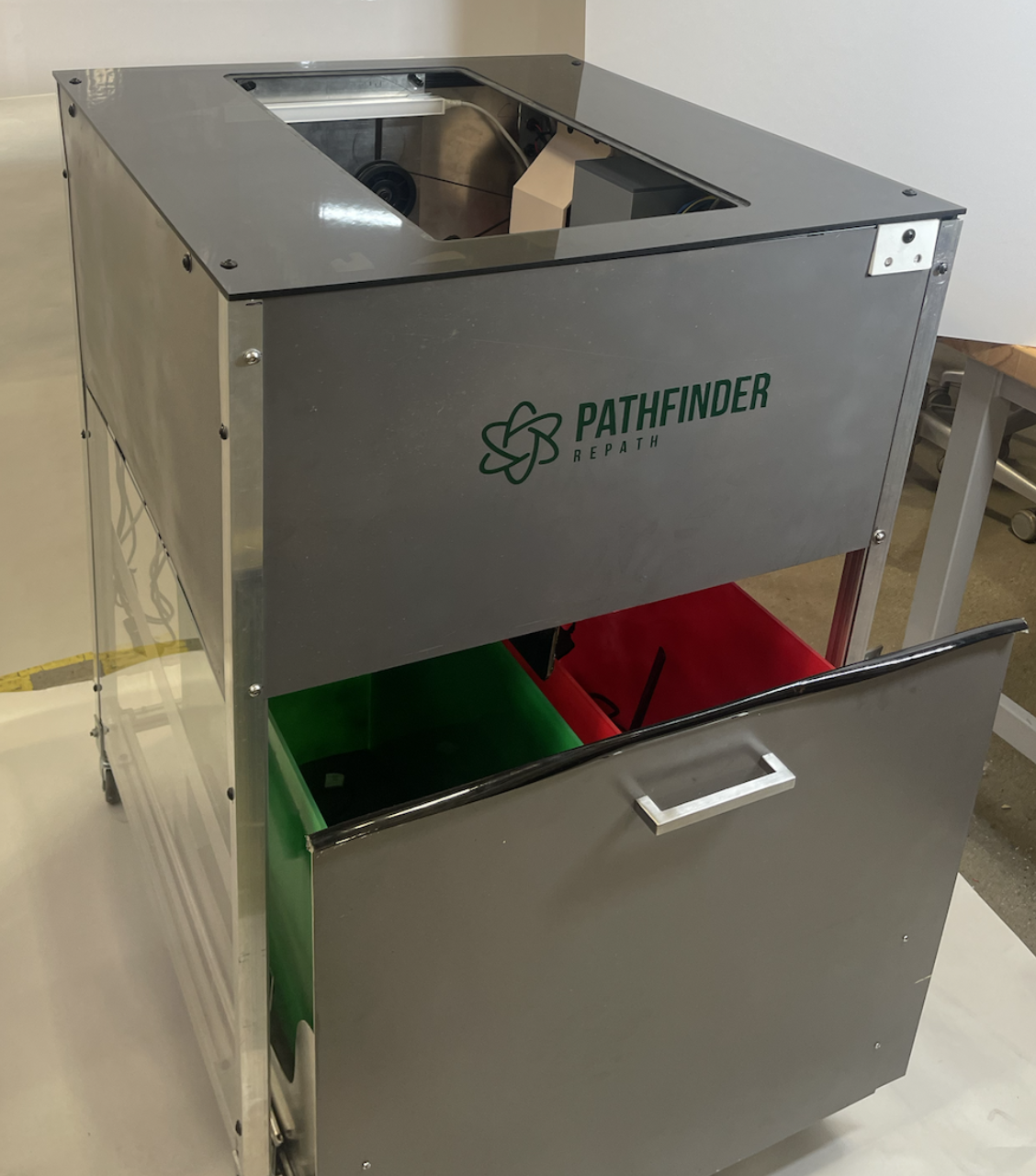
The final deliverable is the Pathfinder, a smart sorting bin that uses a dual-camera computer vision system to identify single-use medical devices and a motorized paddle-wheel mechanism to sort them into high-value and low-value bins in under three seconds. The paddle wheel is driven by a belt transmission selected for its flexibility in motor placement and ease of adjustment within the constrained housing geometry, and the computer vision model was trained using EdgeImpulse to reliably detect devices against a standardized background. The Pathfinder feeds into the broader RePath ecosystem, a shared platform that connects hospitals, logistics orchestrators, and medical device manufacturers to enable end-to-end traceability of collected devices through the reverse supply chain.

Design

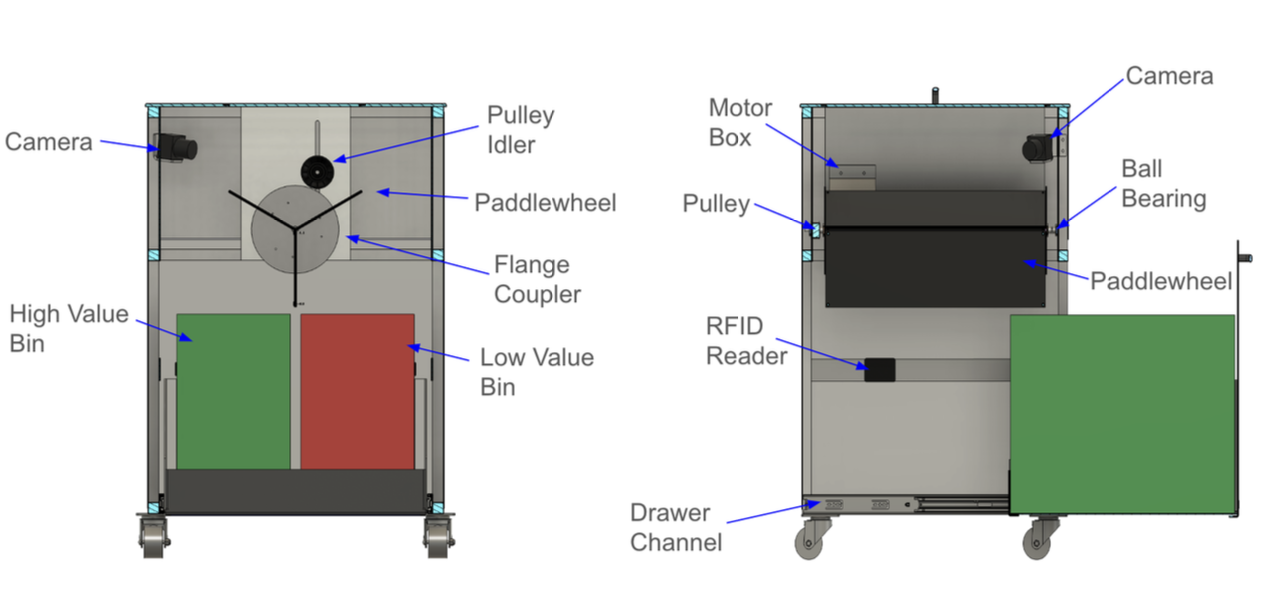
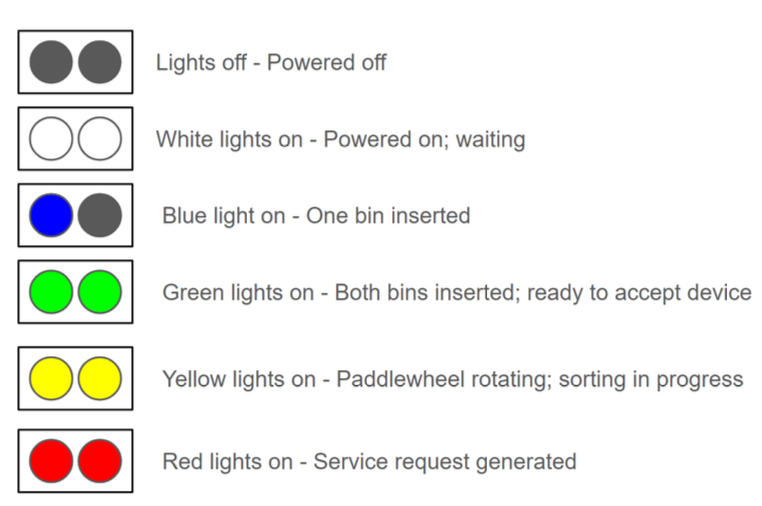
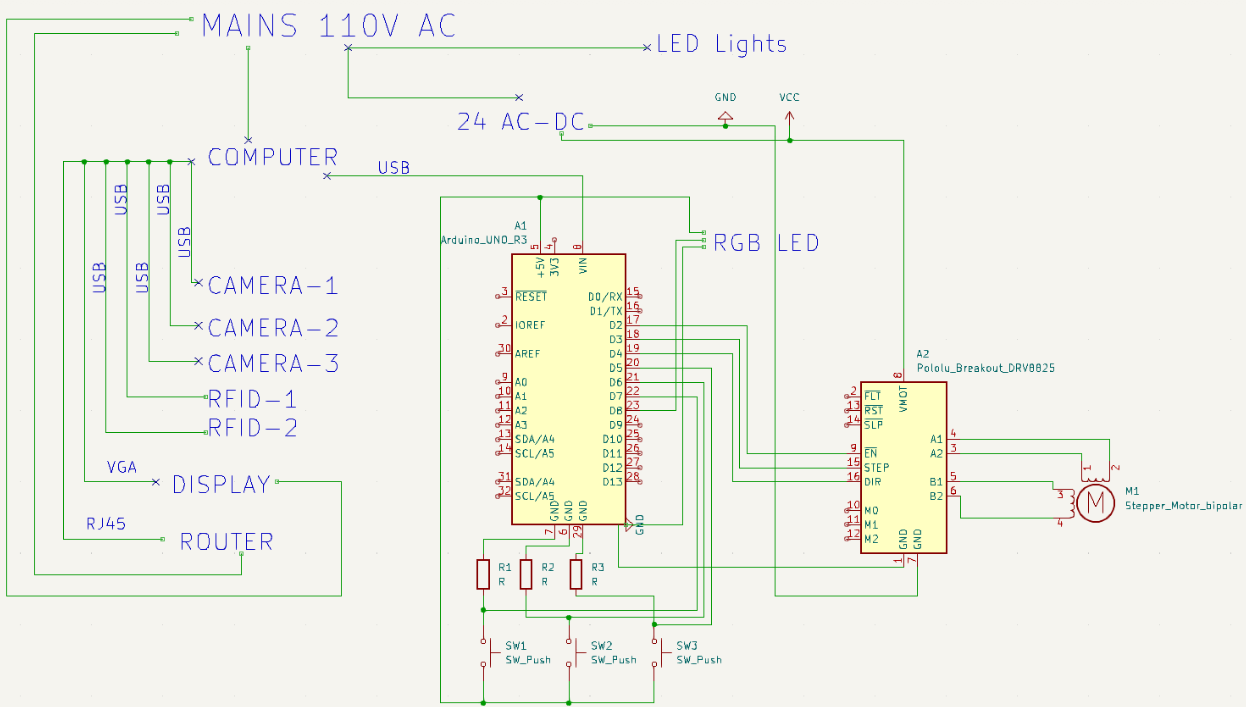
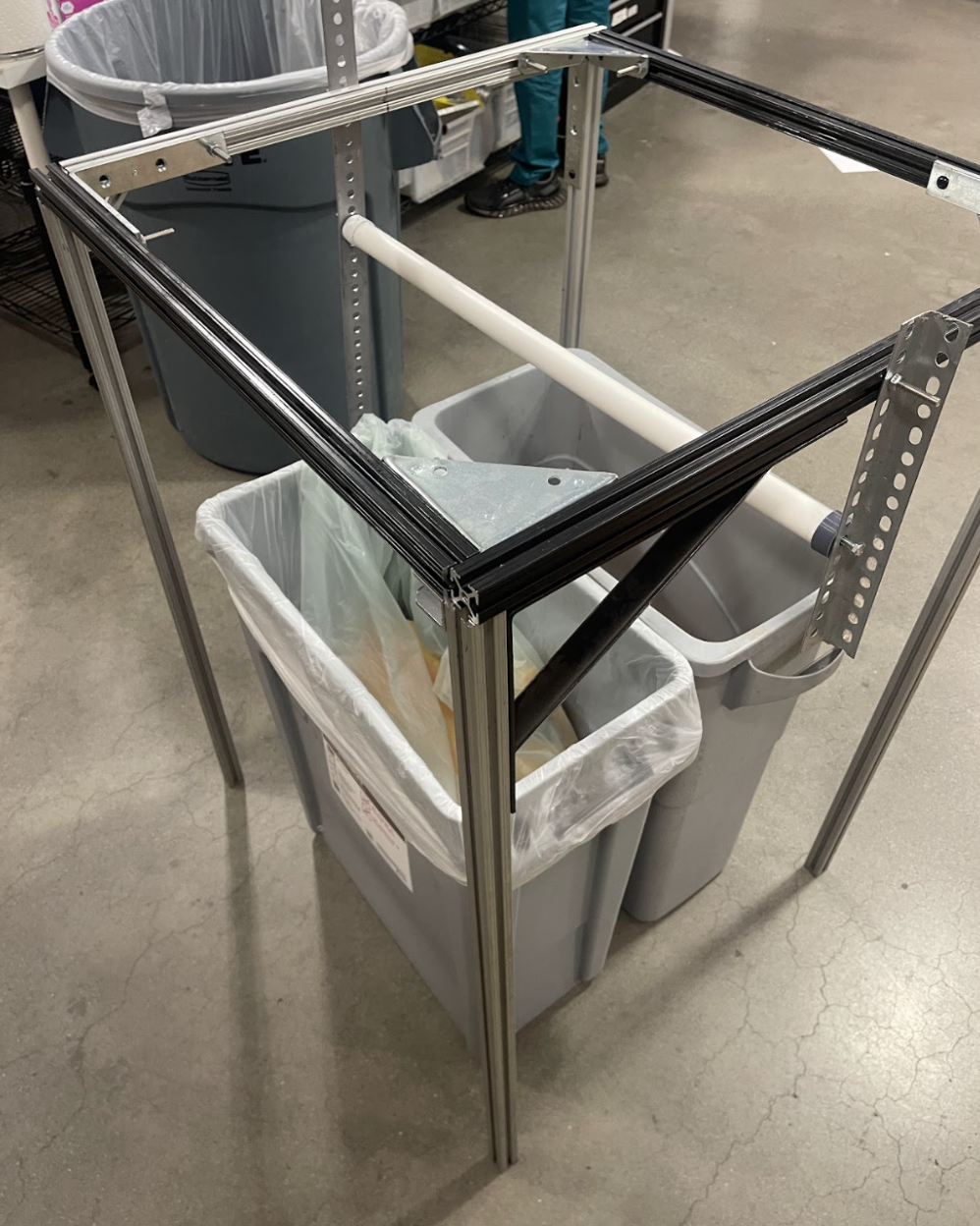
Settling on a solution space was a months long process, and even after settling on a sorting trash can several iterations had to be made to the concept as a whole, as well as smaller componenets. Design sketches were predominately focused on the paddlewheel as it was our most complicated design elemen. Ultimately, the Pathfinder is housed in an aluminum extrusion frame with aluminum sheet walls, modeled after OR furniture for ease of cleaning, with caster wheels for portability. A custom paddle-wheel fabricated from riveted aluminum sheets and driven by a belt transmission rotates to direct items into one of two biohazard bins. Two 4K USB cameras capture device orientation from multiple angles, and an Arduino-based electronics system coordinates the motor, cameras, LED status indicators, RFID reader, and internet-connected database.
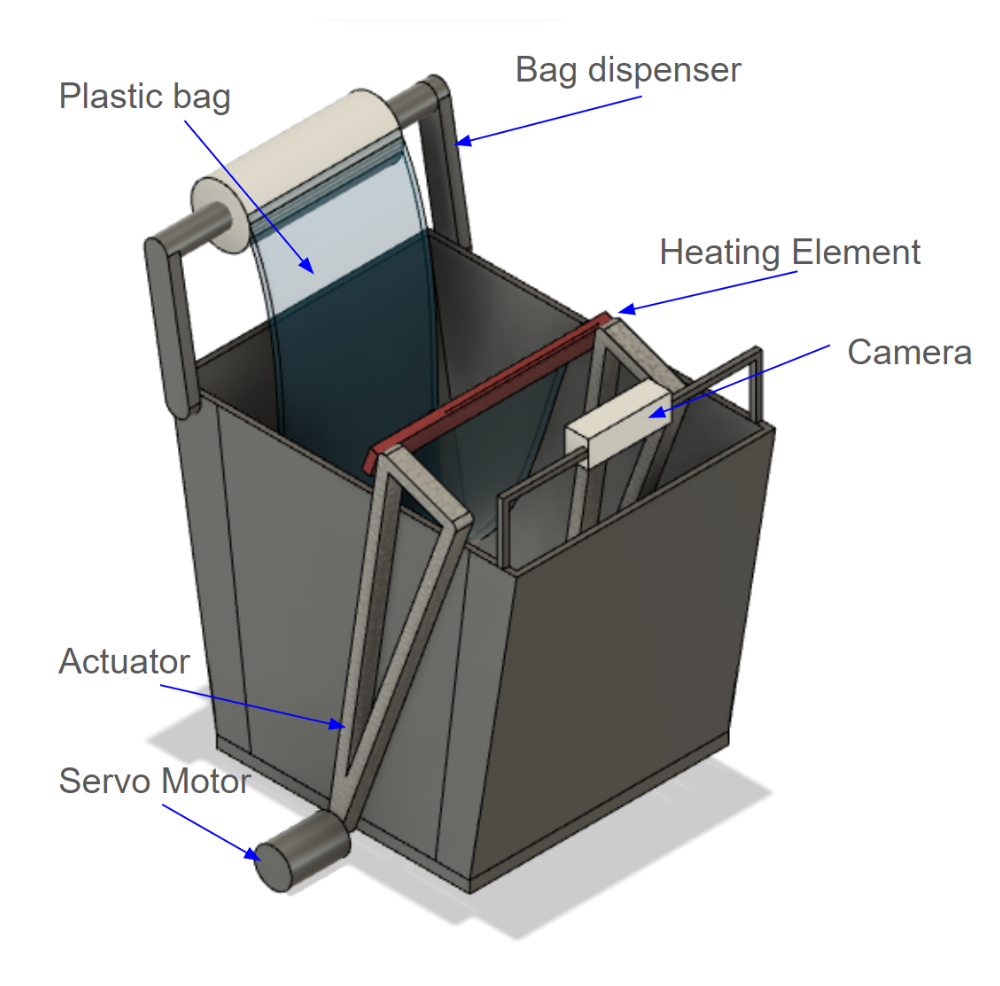
Once we had decided on the concept of a smart trashcan, we wrapped up the winter quarter with an initial design idea and created in CAD. This early rendering of the automated bagging system concept featured a bag dispenser, heating element, camera, actuator, and servo motor in an integrated enclosure. This concept was presented to J&J liaisons and ZHAW partners during a Stanford-ZHAW collaboration trip to Switzerland, where stakeholder feedback drove a pivot toward broader supply chain traceability and reduced plastic consumption.
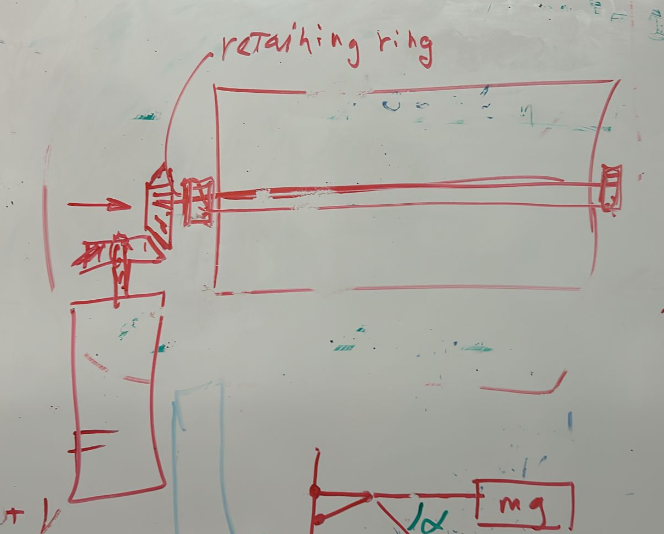
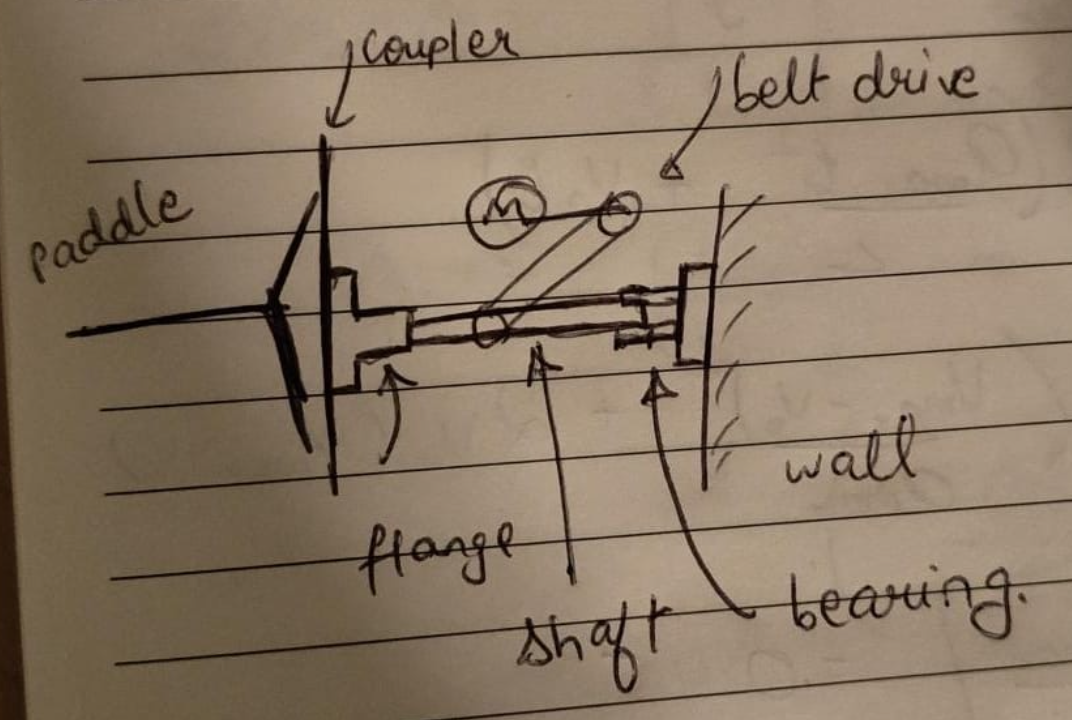
Engineering sketches comparing bevel gear and belt transmission configurations for driving the paddle wheel mechanism. The bevel gear concept (left) explored 90-degree motor orientation, while the belt transmission (right) prioritized motor placement flexibility and ease of adjustment — the latter was ultimately selected for its compatibility with the Pathfinder's constrained housing geometry.
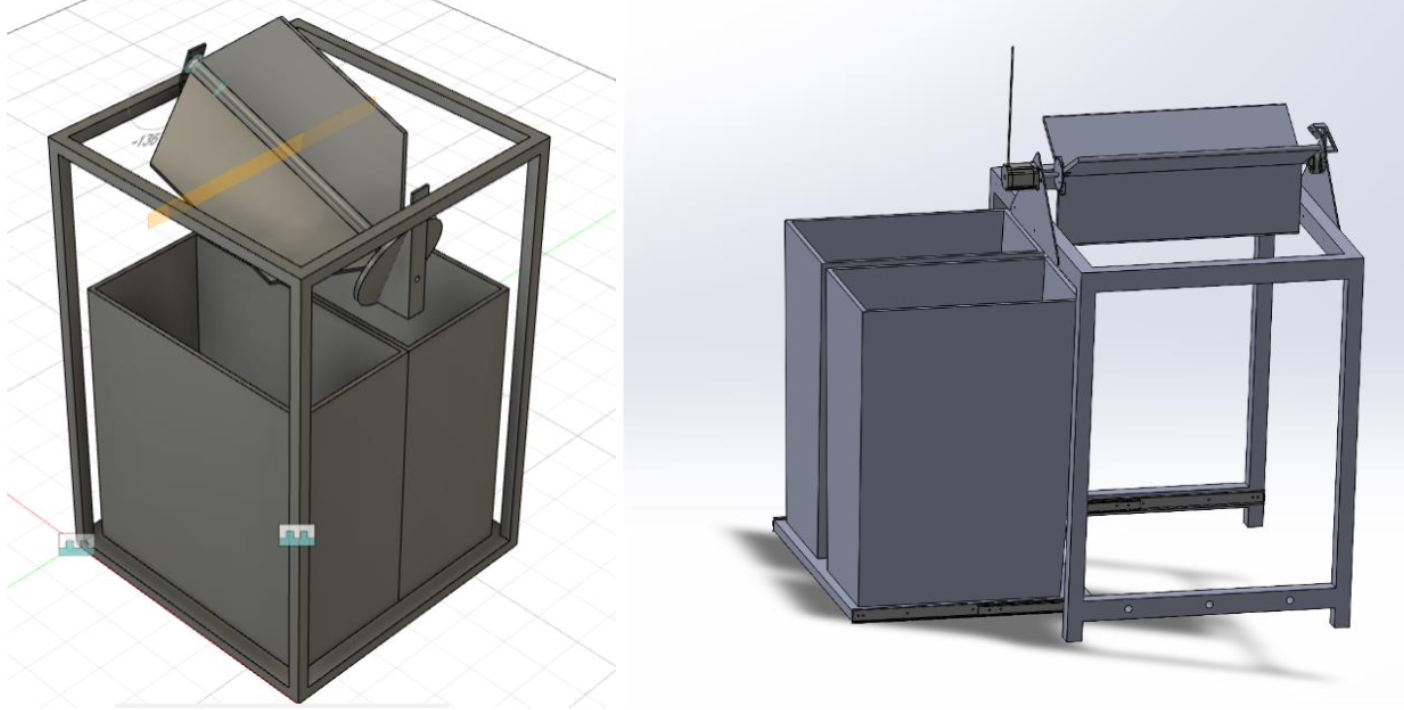
Side-by-side CAD models exploring two paddle wheel configurations for the Pathfinder sorting system: an angled paddle wheel approach (left) and the initial upright concept (right). However, after doing a quick functional prototype, the stapler still got caught on the rim of the bin. We later got insights from our Swiss counter-parts that there wasn’t a lot of standardization with the size of operating room biohazard bin size, ultimately leading to a lengthened frame to better accommodate downstream system integration.
I was responsible for creating the robust CAD for our final design.

Build

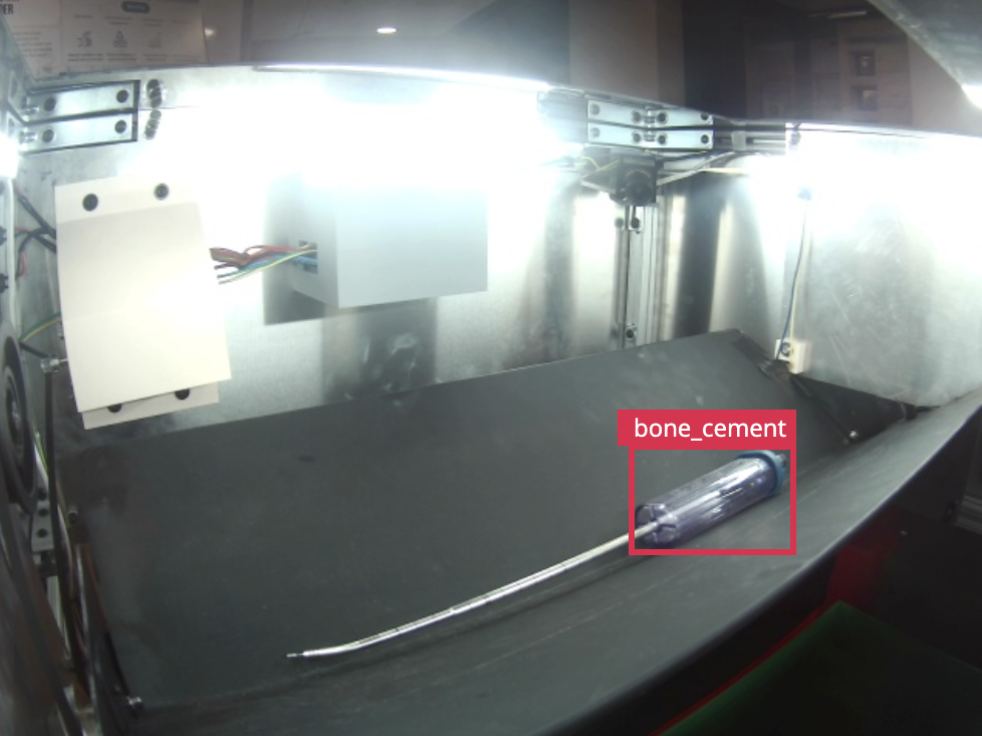
The prototype was constructed using aluminum extrusions as the primary structural frame, with sheet aluminum panels forming the housing and a custom vacuum-formed plastic lid providing a controlled entry environment for consistent device presentation to the cameras. Internal components were fastened using rivets, with 3D-printed brackets and mounts used to position sensors, cameras, and mechanical assemblies within the constrained geometry of the enclosure. The paddle-wheel mechanism is driven by a belt transmission connected to a DC motor, controlled through an L298N motor driver, with limit switches defining the rotational start and stop positions for each sorting cycle. The computer vision model was trained using EdgeImpulse on approximately 4,000 images of three J&J devices, with bounding boxes deliberately focused on the distinctive plastic ends of each device to maximize recognition reliability across orientations. The full-stack software was built on XAMPP with a MySQL database, PHP backend, and HTML/CSS/JavaScript frontend dashboards tailored to separate stakeholder views.

Testing and Iterations

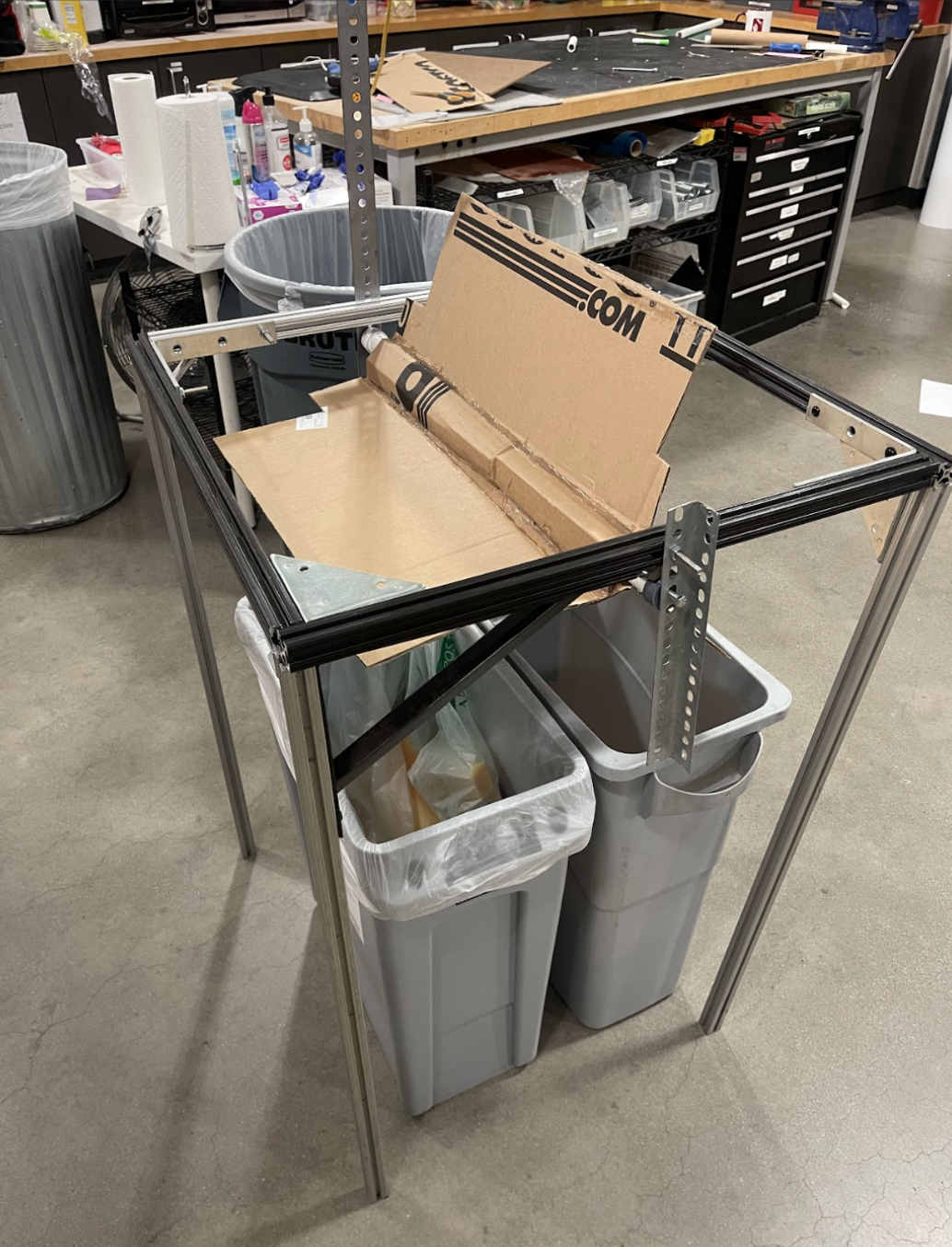
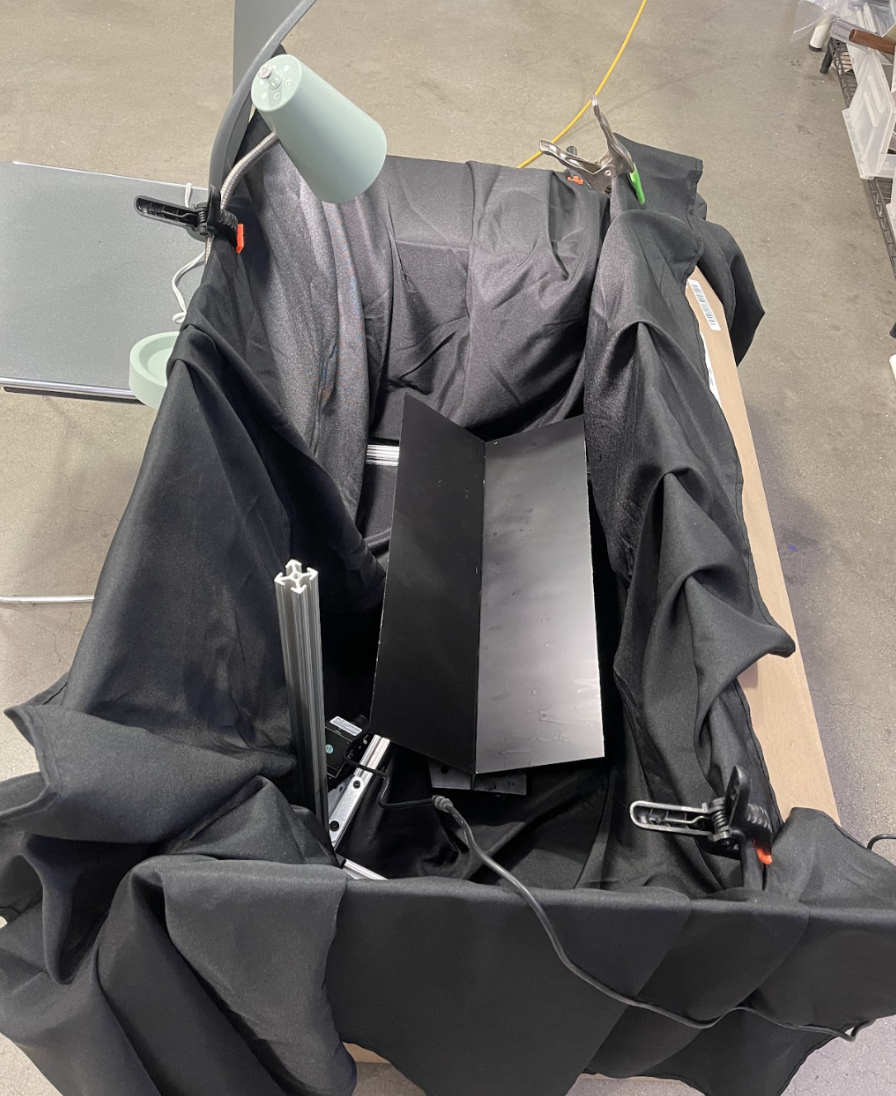
A training jig using a mock two-winged paddle-wheel in a cardboard enclosure was built early in the quarter to develop and validate the computer vision model in parallel with hardware development. Camera placement, height, and lighting were iterated through hands-on testing before being incorporated into the final CAD. The object detection model was refined across multiple training rounds, scaling from roughly 250 images per device up to 1,000, and ultimately achieved an 89.3% identification success rate with false positives occurring only about 1 in 20 attempts. Paddle-wheel geometry was also iterated on, including an explored and ultimately rejected angled-axis concept to accommodate the 22-inch surgical stapler.

Reflections

The team repeatedly confronted the need to unlearn prior assumptions, first pivoting away from device sterilization and redesign toward end-of-life sorting, then again after the Switzerland trip when stakeholder feedback pushed the concept from a standalone bin to a full ecosystem with a third-party orchestrator. The most impactful design decisions came from staying in dialogue with OR nurses who made clear they could not absorb additional workflow steps. Building a hardware, software, and business model system simultaneously under a compressed academic timeline also surfaced how quickly integration complexity compounds when all three are evolving at once.